NEWS
Advancing Torture Prevention: Experts Highlight Safeguards, Oversight and Accountability across the Criminal Justice System
Advancing Torture Prevention: Experts Highlight Safeguards, Oversight and Accountability across the Criminal Justice System
30 June 2026, Vienna, Austria
Exploring police investigative interviewing, independent monitoring, protection of vulnerable groups, accountability, and access to justice in places of deprivation of liberty

ODIHR and CDJI Highlight Practical Solutions for Preventing Torture and Ill-Treatment across the OSCE Region
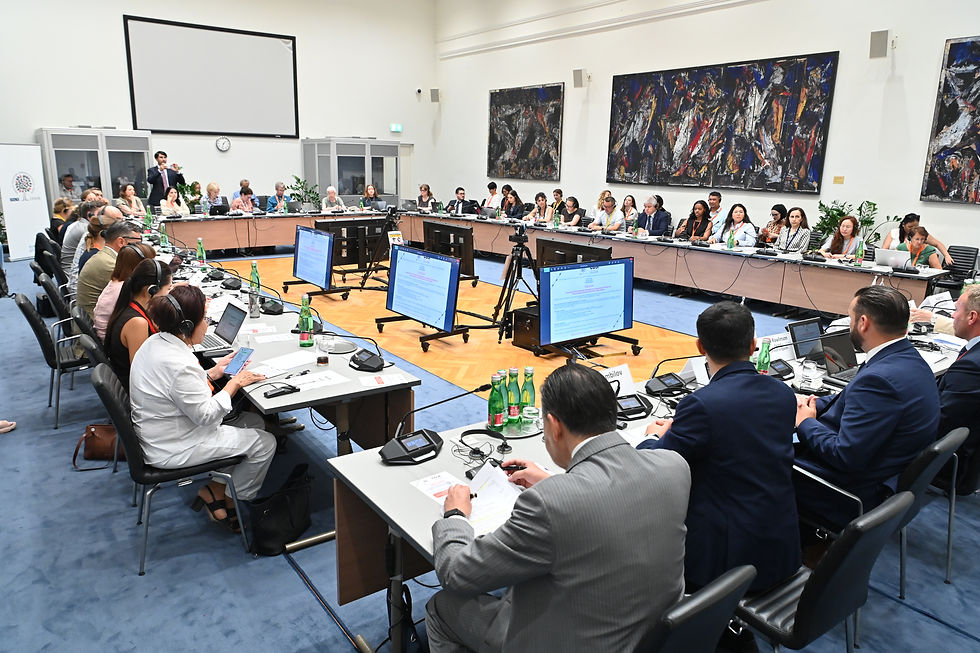
Vienna, Austria, 30 June 2026 – The OSCE Office for Democratic Institutions and Human Rights (ODIHR) and the Centre for Development and Justice International (CDJI) jointly organised the side event “Advancing Torture Prevention: Strengthening Safeguards, Oversight and Accountability across the Criminal Justice System” within the framework of the OSCE Supplementary Human Dimension Meeting on Preventing Torture and Ill-Treatment: Strengthening Co-operation and Implementation.
Held in support of the United Nations International Day in Support of Victims of Torture, the event brought together judges, police professionals, National Human Rights Institutions, civil society representatives, detention monitoring bodies, and international experts to explore one of the most pressing questions facing criminal justice systems today: what works in preventing torture and ill-treatment before violations occur?
Against the backdrop of continuing challenges across the OSCE region, the discussion moved beyond legal standards alone and focused on practical measures capable of reducing risks, strengthening accountability, and protecting human dignity at every stage of deprivation of liberty. Participants examined how effective safeguards, professional policing, independent oversight, and cooperation between institutions can help transform torture prevention from a legal obligation into an operational reality.
The discussion explored a broad range of issues, including safeguards during the earliest stages of detention, police investigative interviewing and human rights-based investigations in line with the Méndez Principles and the PEACE Model, independent monitoring of places of deprivation of liberty, protection of women, children, and other vulnerable groups, effective complaints mechanisms, access to justice, and rehabilitation for victims. Speakers highlighted that torture prevention begins long before allegations emerge and depends on the quality of institutions, professional culture, transparency, and accountability.

Opening the event, ODIHR representatives underscored that the absolute prohibition of torture remains a cornerstone of international human rights law and a fundamental obligation of all OSCE participating States. Speakers stressed that effective prevention requires a whole-of-system approach involving governments, law enforcement agencies, judges, lawyers, National Human Rights Institutions, National Preventive Mechanisms, civil society organisations, and international partners working together to identify risks, strengthen safeguards, and build public trust in criminal justice institutions.
The event featured contributions from Elīna Šteinerte, Vice-Chair of the United Nations Subcommittee on Prevention of Torture and Chair of the Board of CDJI; Justice Renate Winter, International judge, former Chair of the United Nations Committee on the Rights of the Child; Neil Rawlinson and Gavin Seeley, senior investigators from the Metropolitan Police Service of the United Kingdom; and Azamat Shambilov, President of CDJI.
"There is a clear and shared responsibility to ensure that the absolute prohibition of torture is upheld not only in law, but also in practice. Achieving this calls for sustained political will, strong institutions, professional training, independent oversight, and effective accountability mechanisms. It also requires close co-operation among governments, international organizations, monitoring bodies, civil society, legal professionals, medical experts, and others who contribute to torture prevention efforts."

Maria Telalian, Director of the OSCE Office for Democratic Institutions and Human Rights (ODIHR)

"Courts are often the last line of defence against torture. When allegations of torture or ill-treatment are brought before a judge, they must never be dismissed or overlooked. An independent judiciary has both the authority and the responsibility to ensure that justice is based on law and evidence - not on confessions obtained through fear, coercion, or abuse."
Renate Winter, Honorary President of CDJI
"The essence of prevention system envisaged by OPCAT requires a recognition that while things might not be perfect, instead of apportioning blame, it is important to look at the root causes of these imperfections with that fundamental aim of trying to better the outcomes in the future- future where risks of torture and ill-tretament could be minimised if not eliminated."

Elīna Šteinerte, Chair of the Board of the CDJI, Member UN Subcommittee on Prevention of Torture

"The prevention of torture does not begin with investigations after abuse has occurred; it begins with transparency, accountability, and independent scrutiny. Civil society organisations, National Human Rights Institutions, and monitoring bodies play an essential role in identifying risks, supporting victims, and helping institutions strengthen their practices. At the same time, prevention efforts must never lose sight of those who have suffered violations. Access to justice, effective remedies, and rehabilitation are not only legal obligations, but they are also essential components of a credible and humane criminal justice system"
Azamat Shambilov, President of the CDJI

Neil Rawlinson, Detective Chief Inspector, Metropolitan Police Service, UK
Throughout the event, speakers shared practical experiences and good practices from across the OSCE region, demonstrating how reforms in policing, detention monitoring, judicial oversight, and institutional accountability can contribute to reducing the risk of torture and ill-treatment. Participants also identified opportunities for strengthening regional cooperation, exchanging expertise, and promoting implementation of international standards in a manner that delivers tangible improvements for individuals deprived of liberty.
The event concluded with a shared recognition that effective torture prevention requires continuous vigilance, strong institutions, and meaningful cooperation between state authorities, oversight bodies, civil society, and international partners. ODIHR and CDJI reaffirmed their commitment to supporting efforts across the OSCE region aimed at strengthening safeguards, enhancing accountability, protecting vulnerable groups, and advancing the implementation of the United Nations Convention against Torture (CAT), the Optional Protocol to the Convention against Torture (OPCAT), and other relevant international human rights standards.


"Good interviewing is not about pressure or coercion - it is about professionalism, empathy and evidence. Done properly, it is a cornerstone of criminal justice and protection of human rights."
Find us:
Madrid, Spain
Terms & Conditions
Privacy Policy
Refund Policy
© 2025 by CDJI